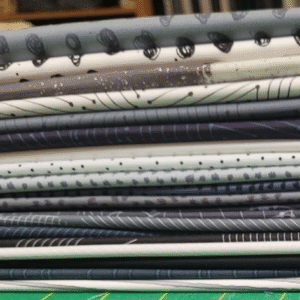
How to Choose Fabric for Your Patchwork Project Without the Overwhelm
Walking into a fabric shop—or browsing online—can feel like sensory overload. With thousands of prints, colours, and textures staring back at you, how do you pull together a bundle of fabrics that will actually look good together in a finished quilt?
Choosing fabric is one of the most exciting parts of the patchwork process, but for many makers, it’s also where sensory overload leads to analysis paralysis. This week at Loopy’s Place, we’re helping to take the guesswork out of fabric selection so you can build your palette with confidence.
The Secret Formula: Scale, Value, and Contrast
The secret to a dynamic quilt isn’t just picking your favorite colours—it’s creating visual interest. If every fabric in your pull is the same size print or the exact same tone, the individual patchwork blocks will blend together and lose their crisp geometry.
To keep your design popping, balance your fabric bundle using these three simple rules:
-
1. Mix Your Print Scales: Combine a large-scale print (your hero fabric) with medium-scale prints, small-scale blender prints (like small dots or subtle leaves), and solid fabrics. This gives the eye places to focus and places to rest.
-
2. Vary Your Colour Values (Light, Medium, Dark): A great trick to test this is snapping a photo of your chosen fabrics on your phone and converting the picture to black-and-white. If all the fabrics look like the same shade of grey, your finished quilt will look flat. You need a mix of light, medium, and dark tones to create depth.
-
3. Pick a “Hero” Fabric First: Start with one fabric you absolutely love that features three or four colours. Use that single fabric as your master colour palette, then select matching supporting fabrics based on the individual accent colours inside it.
Best Fabric Types for Beginners
Not all fabrics behave the same under a presser foot. While it’s tempting to grab whatever feels pretty, sticking to the right fabric type will save you hours of frustration at the sewing machine.
-
100% Quilting Cotton: This is woven specifically for patchwork. It holds its shape, doesn’t stretch out of alignment easily, presses into crisp flat seams, and comes in endless designs.
-
Fabrics to Avoid for Your First Project: Steer clear of slippery polyesters, stretchy knits, heavy denims, or fraying linens until you’ve mastered basic piecing precision. Stick to 100% quilting cotton to guarantee smooth sailing.

Your Week 2 Action Step
Go through your existing fabric stash or visit your local shop and practice pulling a 4-fabric bundle: 1 hero print, 1 medium print, 1 small blender, and 1 solid or light background fabric. Snap a black-and-white photo on your phone to check your contrast levels!
Next week, we’ll be taking those gorgeous fabrics to the machine to master the art of the perfect 1/4-inch seam and flat patchwork blocks.
The Joy of Batch Sewing: How to Make Multiple Thoughtful Gifts Without Stress
When you have a list of people you want to sew for, sitting down to craft each project individually from scratch can start to feel overwhelming. Changing threads, picking up and putting down scissors, and constantly moving back and forth between your cutting mat and...
How to Finish a Quilt: From Basting to Binding Your Project
There is no feeling quite like laying out a completed quilt top. All those individual pieces, seams, and hours of careful cutting finally come together into one beautiful design. But as every quilter knows, finishing the top is only halfway across the finish line!...
How to Layer a Quilt
From Pieced Top to Finished Quilt: Layering Secrets & What Comes Next You’ve spent weeks selecting your fabrics, cutting with precision, and sewing every seam to perfection.This is an amazing accomplishment. Before you can get to the quilting, you need to know...