Here is how we’ve adapted that process in our classes:
1. Printed Stabiliser
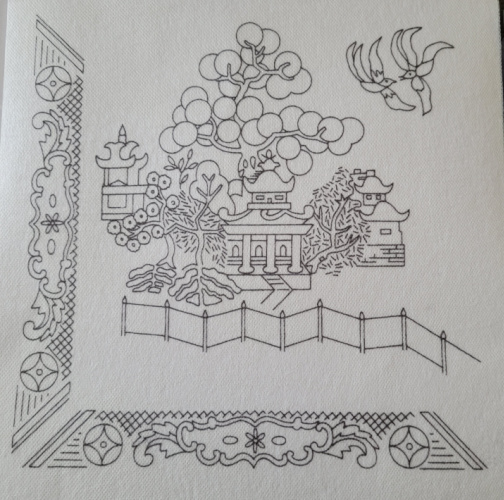
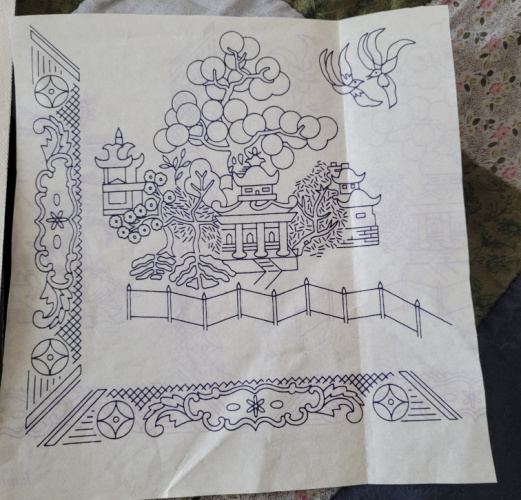
Instead of hand-tracing, we now print our embroidery designs directly onto water-soluble printable stabiliser. This material adheres right to the fabric while you stitch. The result? Black, perfectly crisp, high-contrast lines that are incredibly easy to see. There is no guesswork, no fading, and no squinting. Once the embroidery is complete, a quick rinse in warm water dissolves the stabiliser completely, leaving behind flawless stitches.
2. Enlarged Details for Clarity
As part of our inclusive design process, we have subtly enlarged the scale of our class designs. By expanding the artwork, we’ve opened up the tiny, compressed details that usually cause eye strain. This allows students to focus on learning the rhythm and mechanics of the stitches rather than fighting to see microscopic lines.
The Universal Benefit of Inclusive Design
An incredible thing happens when you design a class with visual accessibility at the forefront: the class becomes drastically better for absolutely everyone.
-
It’s quicker: Students no longer waste valuable class time trying to trace their designs perfectly. They can dive straight into the fun part—stitching!
-
It builds confidence: Beginners catch onto complex stitches much faster because the roadmap on their fabric is crystal clear.
-
It reduces fatigue: The crafter who usually gets a headache after an hour of close-up work can now stitch comfortably for longer.
This is the true heart of accessibility. It isn’t a checklist to tick off for legal compliance, nor is it a modification made to benefit a select few. It is an intentional philosophy that says: You are welcome here, you were thought of before you arrived, and this space was built for you to succeed.
We can’t wait to welcome you to the studio. Whether you are a seasoned stitcher or picking up a needle for the very first time, there is a perfectly clear path ready for you. And, if there is something we can do to make classes easier for you, please get in touch.
How a Sewing Class Saved My Retirement
We often talk about retirement as the ultimate finish line—a paradise of endless free time. But what happens when the initial excitement fades, and you’re left looking in the mirror wondering, "Who am I now?" For many, retiring from a decades-long career doesn’t feel...
New Year, New Projects: Borders, Sales, and a Maltby Welcome!
Welcome to 2026. The studio doors are officially open, the kettle is on, and I am so excited to dive into a brand-new year of creativity with you all. Here is what’s going on at Loopy’s Place this week! New YouTube Tip-How to stop borders becoming wavy There is...
Crafting for Wellbeing: More Than Just a Hobby
We've all seen the beautiful finished products of crafting – the intricate knitting, the perfectly sewn garment, the sparkling piece of jewellery. But if you've ever walked into a craft class, you'll quickly realise that often, the true masterpieces aren't just the...